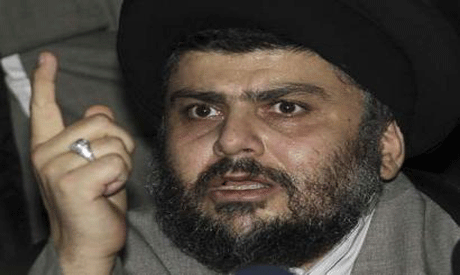
Radical anti-US cleric Moqtada al-Sadr (Photo:Reuters)
Radical anti-US cleric Moqtada al-Sadr on Friday rejected Western calls for Syria's President Bashar al-Assad to quit, calling the embattled leader a "brother" who stood in opposition to the United States.
For the first time Thursday, US President Barack Obama and Western leaders said that Assad must step down.
"We reject Obama's interference in Syrian affairs," Sadr said in a statement released by his office in the holy Shiite city of Najaf in south Iraq.
Sadr said he supported revolutions in Tunisia and Egypt that overthrew despots there, but added that "there are many differences between the popular revolutions and what is happening in Syria."
"The difference is not in the people and their revolution, but in the government itself -- the brother, Bashar al-Assad, is a man of opposition against the American colonial presence in the Middle East."
Sadr also praised Syrians who oppose America, and offered to mediate in Syria if anti-regime protesters and Assad agree.
Obama and other major leaders such as British Prime Minister David Cameron and German Chancellor Angela Merkel on Thursday called on Assad to quit.
Obama also slapped harsh new sanctions on Syria, freezing state assets and blacklisting the oil and gas sector, in an escalation of pressure aimed at halting a bloody crackdown on protests.
Activists say more than 2,000 have been killed in the Syrian government's brutal response to demonstrators urging an end to four decades of iron-fisted rule by Assad and his late father, Hafez al-Assad, who died in 2000.
Short link: